



















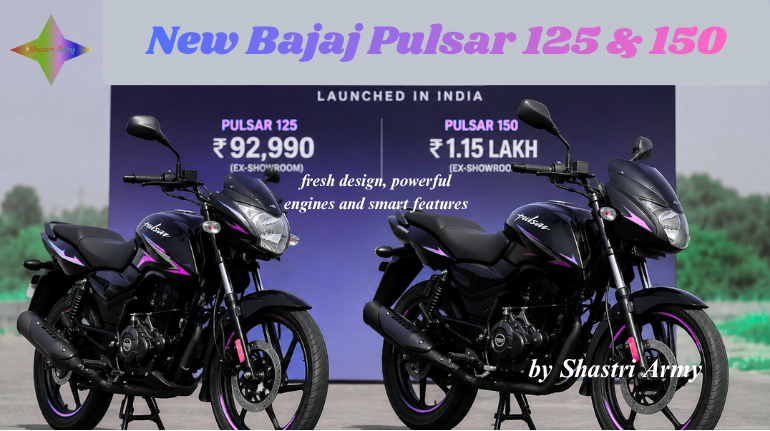
New Bajaj Pulsar 125 & 150 arrive: Bajaj Auto has introduced updated versions of the Pulsar 125 and Pulsar 150 in India, bringing fresh styling, new mechanical components and more technology to two of its familiar motorcycle names. The new Pulsar 125 starts at ₹92,990, while the Pulsar 150 starts at ₹1.15 lakh, with prices quoted ex-showroom.
For riders who already know the Pulsar name, the latest models are interesting because Bajaj has tried to modernise the motorcycles without completely changing their familiar character. The bikes continue to have the sporty appearance that has made the Pulsar popular, but they now receive updates aimed at improving everyday riding, comfort and technology.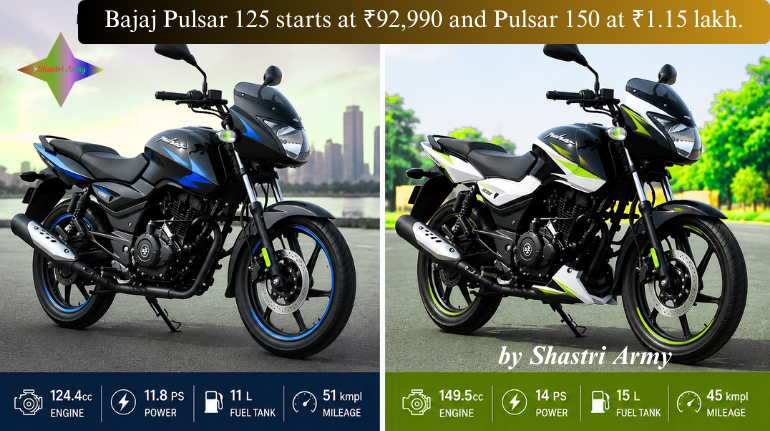
Bajaj Pulsar 125 and Pulsar 150 Price
The new Bajaj Pulsar 125 starts at ₹92,990 ex-showroom, while the Pulsar 150 starts at approximately ₹1.15 lakh ex-showroom. The higher variants cost more depending on the equipment and seating configuration.
The Pulsar 125 is positioned for buyers looking for an affordable sporty commuter, while the Bajaj Pulsar 125 is aimed at riders who want additional engine performance.
The on-road price will be higher because it includes registration, insurance and other applicable charges. These costs can also differ from one city to another.
Fresh Bajaj Pulsar 125 Design
Bajaj has kept the familiar Pulsar identity but added several visual changes.
Both motorcycles get a new LED headlamp, while the signature fuel-tank design remains familiar. The bikes also feature alloy wheels and a chin fairing that adds a sportier appearance.
The result is a design that feels familiar to existing Pulsar fans while looking more modern than the previous versions.
This is a sensible approach because the Pulsar’s styling has become one of its strongest identities. A complete redesign could have moved the motorcycle too far away from what buyers already like.
New Engine and Mechanical Updates
The latest Bajaj Pulsar 125 and Pulsar 150 are not merely cosmetic updates.
Both motorcycles receive revised engines, updated frames and a new mono shock rear suspension setup. These changes are intended to improve the overall riding experience while giving the motorcycles a more modern mechanical package.
The change to a mono shock is particularly notable because the suspension plays an important role in how a motorcycle feels over uneven roads, corners and speed breakers.
For Indian riders, this can be useful because daily riding often involves a mixture of smooth roads, potholes, traffic and rough patches.
Bajaj Pulsar 125 Performance
The updated Bajaj Pulsar 125 continues to use a 125cc-class engine and is designed mainly for everyday riding.
The new-generation model uses a revised 125cc engine with a five-speed gearbox. Reported output is around 12.1 PS and 11.4 NM, giving the motorcycle enough performance for regular city commuting and occasional longer rides.
A 125 motorcycle is generally chosen for its balance rather than outright performance.
For commuters, smooth acceleration, manageable size and easy handling can matter more than having a very powerful engine. The Bajaj Pulsar 125 aims to combine these qualities with a sporty design.
Bajaj Pulsar 150 Performance
The Bajaj Pulsar 125 moves into a higher performance category with its larger engine.
The updated motorcycle uses a 149cc-class engine and produces around 14 PS, with torque of approximately 14.1 NM, depending on the stated specification. It also uses a five-speed gearbox.
The additional engine capacity gives the Pulsar 150 a stronger character compared with the 125.
It can be a better match for riders who regularly travel on highways, ride with a passenger or simply want more performance from their motorcycle.
Five-Inch TFT Display
One of the most noticeable technology upgrades is the availability of a five-inch TFT display on higher variants.
This is a significant change from the simpler instrument clusters traditionally associated with motorcycles in this segment.
The TFT system can provide a more modern interface and, on applicable versions, supports features such as navigation and smartphone-related connectivity.
For riders who use their phone for navigation, having these functions integrated into the motorcycle can make everyday journeys more convenient.
Ride Modes
Selected variants of the updated Pulsar models also receive three riding modes.
These modes are designed to alter the motorcycle’s response for different riding conditions.
While experienced riders may not need to change modes frequently, having the option can be useful for people who want different levels of response depending on the road or weather.
It also gives the motorcycles a more advanced feel compared with traditional commuter bikes.
Crawl Tech
Another interesting addition is Crawl Tech, which focuses on low-speed riding.
Low-speed movement is a common part of motorcycle riding, especially in busy Indian cities.
Traffic jams, crowded markets, narrow lanes and parking areas all require precise control at low speeds. A feature designed to make this type of riding easier can therefore be useful in everyday situations.
Idle Start Stop Technology
The updated Pulsar models also bring idle start/stop technology on selected variants. The idea is simple: when the motorcycle is stationary under suitable conditions, the engine can switch off and restart when the rider is ready to move.
This can help reduce unnecessary engine idling in traffic and may contribute to better fuel efficiency in certain riding situations. It is a small New feature, but one that reflects the growing use of technology in everyday motorcycles.
USB Type-C Charging
Smartphones are now a useful companion for many riders, especially for navigation and communication.
Many riders use their phones for maps, calls and other functions while travelling. The new Pulsar models add a USB Type-C charging facility on applicable variants.
This can be especially helpful during longer journeys when navigation is running continuously and battery usage is high.
New Bajaj Pulsar 125 Features
The exact equipment depends on the variant, but the new Pulsar 125 can offer a considerably richer package than a basic commuter motorcycle.
Key available features include:
- LED headlamp
- Updated instrument cluster
- Five-inch TFT display on selected variants
- Smartphone connectivity
- Navigation on applicable versions
- Three riding modes on higher variants
- Mono shock rear suspension
- Crawl Tech
- Idle start/stop technology
- USB Type-C charging
- LED indicators on selected versions
- Hazard lights on higher variants
The availability of each feature should be checked against the particular variant before purchasing.
Pulsar 150 Features
The Pulsar 150 follows a similar technology approach while offering the benefit of its larger engine.
Depending on the variant, buyers can get features such as:
- LED lighting
- Five-inch TFT display
- Navigation
- Smartphone connectivity
- Riding modes
- Crawl Tech
- Idle start/stop technology
- USB Type-C charging
- Hazard lights
- LED indicators
- Mono shock rear suspension
- Updated frame and engine
The higher variants are aimed at buyers who want a more feature-rich motorcycle.
Pulsar 125 vs Pulsar 150
The choice between the two motorcycles depends largely on how you plan to use your bike. The Pulsar 125 makes sense for someone who wants a sporty-looking motorcycle for daily commuting. Its smaller engine can be a practical choice for city riders who do not need the additional performance of a 150cc motorcycle.
The Pulsar 150, on the other hand, is better suited to riders who want stronger performance and expect to spend more time on open roads. If your riding includes regular highway trips or carrying a passenger, the additional power of the 150 can be useful.
Which Pulsar Is Better for Daily Use?
For mostly city-based commuting, the Bajaj Pulsar 125 can be an appealing option. Its engine size, manageable dimensions and sporty design make it suitable for everyday travel.
However, riders who want more performance should consider the Pulsar 150. The right choice should not be based only on engine size. Think about your daily distance, traffic conditions, passenger use, highway travel and budget before deciding.
Is the New Pulsar 125 Worth Buying?
The new Bajaj Pulsar 125 has become more interesting because Bajaj has added features that were once more commonly found on expensive motorcycles.
The combination of a sporty design, updated engine, mono shock suspension, modern display options and connectivity features gives it a stronger overall package. For a young rider or daily commuter looking for a motorcycle that feels more exciting than a basic commuter, the Bajaj Pulsar 125 deserves consideration.
Is the New Pulsar 150 Worth Buying?
The Bajaj Pulsar 125 remains an attractive choice for riders who want a balance between everyday practicality and stronger performance.
Its larger engine gives it an advantage for highway riding, while the updated electronics and styling make it feel more current. It can be a sensible middle ground for buyers who find a 125cc motorcycle slightly limited but do not want to move into a much larger and more expensive motorcycle category.
What Makes the New Bajaj Pulsar 125 Different?
The biggest change is that Bajaj has focused on several areas at the same time. The new motorcycles receive updates to the engine, chassis, suspension, styling and electronics rather than relying on a simple cosmetic refresh.
That makes the latest Bajaj Pulsar 125 and Pulsar 150 more than just updated versions with a new colour or graphic. They represent a more significant step forward for these long-running models.
Final Verdict
The Bajaj Pulsar 125 and Pulsar 150 continue the Pulsar story while bringing the motorcycles closer to modern expectations.
With prices starting at ₹92,990 for the Pulsar 125 and around ₹1.15 lakh for the Pulsar 150, the two motorcycles target slightly different types of riders.
The Bajaj Pulsar 125 is a practical choice for buyers who want sporty styling, manageable performance and modern features. The Pulsar 150 is aimed at riders who want more engine performance and stronger highway ability.
The addition of a TFT display, riding modes, navigation, Crawl Tech, updated suspension and smartphone-friendly features gives both motorcycles a more modern character.
For buyers looking for a familiar name with a fresh approach, the latest Pulsar models could be worth a closer look.
Frequently Asked Questions
1. What is the price of the new Bajaj Pulsar 125?
The new Bajaj Pulsar 125 starts at ₹92,990 ex-showroom. Higher variants cost more depending on the features and seating configuration.
2. What is the price of the new Bajaj Pulsar 150?
The new Bajaj Pulsar 150 starts at approximately ₹1.15 lakh ex-showroom. The price increases for higher variants with additional equipment.
3. What are the major updates on the new Pulsar 125?
The Pulsar 125 receives a revised engine, updated frame, monoshock rear suspension, refreshed styling and modern technology features including a TFT display on selected variants.
4. Does the new Pulsar 150 get a TFT display?
Yes. Selected higher variants of the new Pulsar 150 receive a five-inch TFT display with additional connected features and navigation.
5. Does the Pulsar 125 have riding modes?
Yes. Higher variants of the updated Pulsar 125 offer three riding modes, along with additional technology features.
6. What engine does the Pulsar 125 use?
The updated Pulsar 125 uses a new 125cc-class engine paired with a five-speed gearbox. Reported output is around 12.1 PS and 11.4 Nm.
7. What engine does the Pulsar 150 use?
The updated Pulsar 150 uses a 149cc-class engine producing around 14 PS and 14.1 Nm, paired with a five-speed gearbox.
8. Which is better for city riding, Pulsar 125 or Pulsar 150?
The Pulsar 125 can be a good choice for riders who mainly commute in the city. The Pulsar 150 may be better for people who want additional performance or regularly travel on highways.
9. Does the new Pulsar have a monoshock suspension?
Yes. Both updated models receive a monoshock rear suspension setup as part of their mechanical changes.
10. Does the new Pulsar offer smartphone connectivity?
Selected variants offer smartphone-related connectivity features, including navigation and screen-related functions through the five-inch TFT display.
11. Does the Pulsar have USB Type-C charging?
Yes, USB Type-C charging is available on the updated Pulsar models, depending on the variant.
12. Which one should you buy: Pulsar 125 or Pulsar 150?
Choose the Pulsar 125 if your priority is everyday commuting and a lower starting price. Choose the Pulsar 150 if you want stronger performance and more capability for longer rides.