


















Google has officially unveiled the Pixel 11 series on August 12, 2026, turning what was once a rumor-filled upgrade cycle into one of the year’s biggest smartphone launches. The latest Pixel 11 lineup features the Pixel 11, Pixel 11 Pro, Pixel 11 Pro XL, and Pixel 11 Pro Fold, all powered by Google’s new Tensor G6 processor. The company has also pushed harder into AI-powered photography, proactive assistance, translation, video creation, and smarter interactions.
But here is the interesting part: the Pixel 11 is not simply about making a phone faster or adding another camera sensor. Google is trying to make the smartphone feel more like an intelligent assistant that understands what is happening around you. Features such as Magic Capture, Gemini Intelligence, High Light, advanced video tools, and real-time translation show where Google believes smartphones are heading next. Some of these ideas may look small when listed on a specification sheet, but their everyday impact could be much bigger.
So, what makes the Google Pixel 11 different, and which features could influence the future of smartphones? 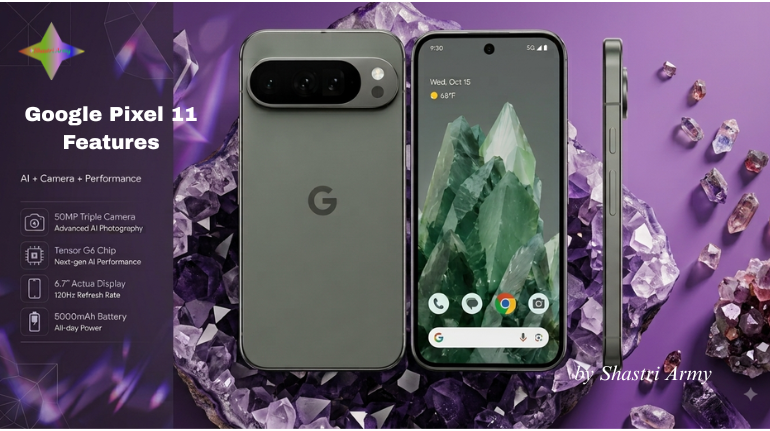
Google Pixel 11 at a Glance
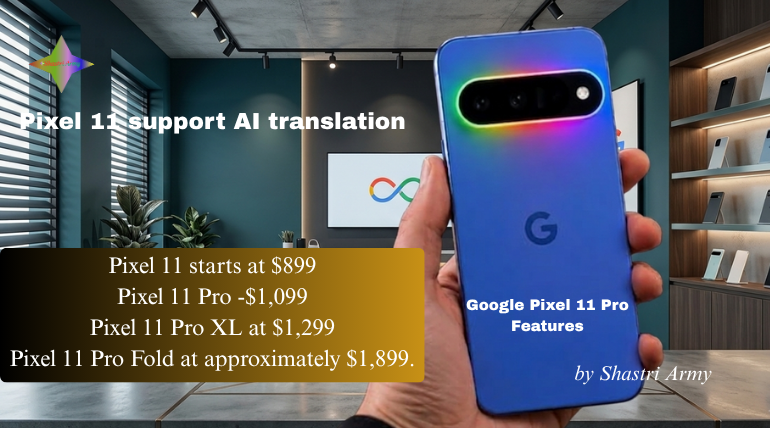
The Pixel 11 generation combines new hardware with Google’s increasingly AI-first approach to mobile software. The standard Pixel 11 starts at $899, while the Pixel 11 Pro and Pro XL start at $1,099 and $1,299 respectively. The Pixel 11 Pro Fold starts at about $1,899. Google has also increased base storage to 256GB on the new phones and claims battery life of up to 30 hours, while charging has received an upgrade as well.
| Feature | Pixel 11 Series Highlight |
|---|---|
| Processor | Google Tensor G6 |
| Operating system | Android 17 |
| AI platform | Gemini-powered features |
| Camera innovation | Magic Capture and advanced AI photography |
| Video | Pro video tools and improved stabilization |
| Translation | Real-time media translation |
| Security/interaction | High Light and smarter contact alerts |
| Storage | Starts at 256GB |
| Battery | Up to 30 hours claimed |
| Foldable model | Pixel 11 Pro Fold |
| Starting price | $899 for Pixel 11 |
The important thing is that Google’s strategy is moving beyond traditional hardware competition. Instead of asking whether a phone has the fastest processor or the largest camera sensor, Google increasingly wants consumers to ask a different question: What can the phone actually do for me?
1. Tensor G6 Could Make AI Phones Much More Powerful
The first major feature is the Google Tensor G6 chipset, which powers the new Google Pixel 11 family. Earlier leaks suggested that Google was moving toward a new CPU architecture and a 2nm manufacturing process, although leaked specifications should always be treated cautiously until confirmed by the company. The latest launch coverage confirms Tensor G6 as the processor behind the Pixel 11 generation.
Why does this matter? Because Google’s Tensor strategy has never been purely about winning benchmark charts. The company’s bigger goal is to make artificial intelligence work directly on the phone. That means speech recognition, image processing, translation, photo editing, personalization, and other AI functions can be handled more intelligently without depending entirely on cloud servers.
That could become one of the most important smartphone trends of the next few years. Imagine a phone where AI isn’t an application you open but a layer running quietly underneath almost everything you do. The camera understands what you are photographing, the phone recognizes useful information from your screen, translation happens while media is playing, and your assistant becomes more proactive. Tensor G6 is important because specialized hardware can make these experiences faster and more practical.
2. Gemini Intelligence Moves AI From Commands to Assistance
Google Pixel 11 is also taking a major step toward proactive AI assistance. Instead of waiting for users to type a question or say a specific command, the Google Pixel 11 generation is designed to understand context and help more naturally. Google’s new Gemini-powered features are intended to make the phone more aware of what users are doing and what information may be useful at that moment.
Think about the difference between a traditional assistant and a genuinely useful digital companion. A traditional assistant waits for instructions. A smarter assistant could recognize that you are preparing for a meeting, traveling to another country, watching content in another language, or trying to organize information from your screen.
That shift could change how people interact with smartphones. Instead of opening five different apps to complete a simple task, users could increasingly rely on the phone to connect those pieces together. The Google Pixel 11 therefore represents a broader change in smartphone design: AI is becoming part of the operating system rather than simply another feature inside an app.
If competitors follow Google’s direction, future Android and iPhone models may spend less time advertising raw specifications and more time explaining how intelligently they can understand users.
3. Magic Capture Could Change Smartphone Photography
One of the most interesting camera features is Magic Capture, which is designed to help users capture the right moment from video. The basic idea is extremely practical. Sometimes you record a video because you are afraid of missing a moment, only to realize afterward that there was one perfect frame buried somewhere inside the footage.
Magic Capture aims to solve that problem by making it easier to pull useful photos from video.
The phone can increasingly analyze a sequence of images and help identify moments that might otherwise disappear.
This could be particularly useful for children, pets, sports, travel, and spontaneous moments. Nobody wants to tell a child to repeat a funny expression just because the camera missed the shot. Nobody wants to photograph a moving subject dozens of times hoping one frame turns out correctly.
The bigger idea is powerful: the camera is becoming a photographer rather than merely a recording device. If smartphones can understand movement, timing, facial expressions, lighting, and composition, the traditional boundary between taking a photograph and creating one begins to disappear.
4. AI-Powered Video Could Challenge Dedicated Cameras
Photography has already been transformed by smartphones, but video is the next major battleground. Google Pixel 11 introduces enhanced video capabilities, including improved stabilization and professional-oriented tools designed to give creators more control. The Pro models also receive advanced video features aimed at people who want more than basic point-and-shoot recording.
For everyday users, stabilization may matter more than complicated technical settings. A phone that can make walking footage look smoother can instantly improve travel videos, family recordings, social-media clips, and short-form content. For creators, additional controls and AI assistance could reduce the amount of time required to turn raw footage into something usable.
Google is also bringing a Creator tab with Pro Video tools to its newer Pixel phones. This is significant because smartphones are increasingly becoming complete content-production machines. You no longer necessarily need a camera, computer, editing application, and complicated workflow just to produce a good social video.
The Google Pixel 11 is part of a larger movement toward phones that can record, edit, enhance, translate, and publish content from one device. That could eventually make dedicated entry-level video equipment less necessary for millions of casual creators.
5. Real-Time Translation Could Make Language Barriers Smaller
Another feature with potentially huge real-world implications is real-time media translation. Google’s latest Pixel generation pushes translation deeper into the smartphone experience, allowing users to understand spoken content across languages more naturally.
Language has always been one of the biggest barriers to communication. Travelers encounter it at airports and hotels. Students encounter it while studying international material. Businesses deal with it when communicating with customers and colleagues in different countries. Families may experience it when relatives live in different linguistic communities.
Smartphone translation has existed for years, but AI is changing the quality and speed of the experience. When translation becomes fast enough to feel almost invisible, people may stop thinking about it as a separate technology.
That is where Pixel’s approach becomes interesting. Instead of opening a translation application every time you encounter another language, translation can become part of the broader phone experience. The long-term possibility is even more exciting: conversations, videos, messages, calls, and media could increasingly become understandable regardless of language.
A smartphone that can act as a personal interpreter could fundamentally change international communication.
6. High Light Turns the Phone Into a Smarter Alert System
Google’s High Light concept is another unusual feature because it changes the way notifications can work. The Pixel 11 Pro models use a new High Light LED integrated around the camera area, while Google connects it with AI-driven alerts and contact-related information.
At first glance, a light on the back of a smartphone may sound like a minor design experiment. But think about how many times you check your phone simply because it vibrated or displayed a notification. Most notifications are not urgent, yet our brains have become trained to react to them.
A smarter notification system could eventually separate meaningful alerts from digital noise. Instead of lighting up the entire screen for everything, the phone could provide subtle physical signals for important information.
Google’s approach suggests that smartphone interaction does not always need to involve looking at the display. That is a surprisingly important idea. The next generation of phones may communicate with users through light, sound, vibration, voice, and context instead of relying almost entirely on a rectangular screen.
7. Better Displays Could Make Premium Phones More Immersive
Display technology remains one of the most important parts of any smartphone, and the Pixel 11 family continues Google’s push toward brighter, smoother screens. Reports and launch coverage point to improved displays across the lineup, with the Pro models receiving especially strong display upgrades.
A good display does more than make photographs look attractive. It affects reading, gaming, video watching, navigation, editing, and even how comfortable a phone feels during long sessions. Brightness is especially important for outdoor use, while high refresh rates make scrolling and animation feel smoother.
The interesting development is that display improvements are becoming less about simply increasing resolution. Most users cannot easily distinguish tiny increases in pixel density from normal viewing distances. Brightness, power efficiency, color accuracy, adaptive refresh rates, and visibility in difficult lighting can make a more meaningful difference.
This is another area where the Google Pixel 11 reflects a broader industry trend: smartphone innovation is becoming more practical. The best upgrade is not always the specification with the biggest number. Sometimes it is the improvement you notice every single day without thinking about it.
8. Pixel 11 Pro Fold Pushes Foldable Phones Forward
The Pixel 11 Pro Fold gives Google another opportunity to influence the future of smartphone design. The new foldable features a thinner design, slimmer bezels, improved durability, an IP68 rating, and a brighter foldable display.
Foldable phones have always promised to combine portability with a larger display, but durability and thickness have remained major concerns. Every generation has tried to make folding devices feel less like experimental gadgets and more like normal premium phones.
The Google Pixel 11 Pro Fold continues that transition. A thinner foldable with better protection could be more comfortable to carry while still providing the advantages of a larger internal screen. This matters because the future of smartphones may not be limited to a single slab design.
Imagine carrying a compact device that opens into a tablet-sized workspace. You could read documents, edit photos, watch videos, multitask, or use AI tools on a larger screen and then fold it back down when you leave.
If foldable continue becoming thinner and tougher, the traditional smartphone shape may eventually become just one option rather than the default.
9. Up to 30 Hours of Battery Life Makes AI More Practical
AI features sound impressive, but they are useless if they drain your battery before the afternoon. That is why Google’s battery improvements may be more important than they initially appear. Google says the new Pixel phones can deliver up to 30 hours of battery life, while the latest lineup also introduces faster wireless charging.
AI processing can be demanding. Cameras constantly analyzing images, translation running in real time, assistants processing context, and advanced video tools all require computing power. Better efficiency therefore becomes essential if manufacturers want users to rely on AI throughout the day.
This is where the Tensor G6 story becomes especially interesting. Earlier leaks suggested Google was focusing heavily on efficiency and CPU improvements, with reports pointing toward a 2nm manufacturing process. Those early details were not all confirmed at launch, so they should be treated as leaked specifications rather than established facts.
Still, the direction is clear: future smartphones need to become smarter without becoming hungrier. Better battery efficiency is what allows AI features to move from occasional demonstrations to everyday tools.
10. Pixel 11 Could Redefine What a Smartphone Actually Is
The tenth feature is not a single component. It is the combination of everything Google is building around the Google Pixel 11.
For years, smartphones were primarily communication devices. Then they became cameras, entertainment systems, payment tools, navigation devices, gaming machines, and portable computers. Now Google is trying to turn the smartphone into something more proactive: a device that understands context and helps users make decisions.
Magic Capture can understand moments in video. Gemini can help with information and tasks. Translation can reduce language barriers. AI photography can improve images after they are captured. Pro video tools can help creators. High Light can make notifications more subtle and contextual. Foldable hardware expands what the device can physically do.
Put those features together and the phone begins to resemble a personal digital operating system for everyday life.
That may be the real significance of Google Pixel 11. The biggest smartphone revolution may not come from a dramatically different screen or an enormous camera sensor. It may come from phones becoming increasingly capable of understanding what we want before we explain it.
What Makes Pixel 11 Different From Previous Pixel Phones?
The Google Pixel 11 generation is different because Google is placing AI much closer to the center of the overall experience. Previous Pixel models already used computational photography and Gemini-related features, but the latest generation expands the idea into photography, video, translation, notifications, assistance, and device interaction.
| Area | Earlier Smartphone Approach | Pixel 11 Direction |
| Photography | Capture the image | Understand and improve the moment |
| Video | Record footage | Capture, stabilize and extract useful moments |
| Translation | Open a translation tool | Integrate translation into media experiences |
| Assistant | Respond to commands | Provide more contextual assistance |
| Notifications | Display alerts | Use more contextual signals |
| Foldable | Large screen in a folding body | Thinner, tougher premium foldable |
| AI | Mostly app-based | Deeper system-level integration |
That difference may matter more over time than any individual specification.
Pixel 11 vs Traditional Smartphone Upgrades
The smartphone market has spent years following a familiar formula: improve the processor, increase camera megapixels, make the display brighter, increase battery capacity, and introduce a slightly different design. That formula still works, but it is becoming harder to create dramatic differences every year.
Google is approaching the problem differently. Rather than asking only how much hardware can be added, it is asking what the hardware and software can accomplish together.
That approach resembles the difference between buying a more powerful engine and buying a smarter vehicle. A more powerful engine gives you additional capability, but intelligent systems can change how the entire vehicle behaves. Google appears to believe that AI can play the second role in smartphones.
Whether consumers agree will depend on reliability. AI features have to work consistently, respond quickly, protect privacy, and avoid becoming annoying. A feature that looks magical in a product demonstration but fails during everyday use will not change the industry.
Could Pixel 11 Really Change Smartphones Forever?
The phrase “change smartphones forever” sounds dramatic, but there is a reasonable argument behind it. Google’s biggest opportunity is not necessarily selling the most phones. It is demonstrating a different philosophy for what phones should do.
If users become comfortable with AI automatically selecting useful moments from video, translating media instantly, organizing information, and assisting without constant commands, other manufacturers will have to respond.
Apple, Samsung, Xiaomi, OnePlus, and other major smartphone companies are already investing heavily in AI. Competition could therefore accelerate the development of more intelligent mobile devices.
The result could be a smartphone industry where the processor, camera, and display remain important, but software intelligence becomes the main battlefield.
The Google Pixel 11 may not single-handedly create that future. But it is certainly helping define it.
The Biggest Challenge for Google Pixel 11
There is one major question Google still needs to answer: Will people actually use these features every day?
Consumers do not buy smartphones simply because a specification sheet looks impressive. They buy phones because the device makes life easier, faster, more enjoyable, or more productive.
Google also faces a pricing challenge. The standard Google Pixel 11 starts at $899, while the Pro and Pro XL begin at $1,099 and $1,299. That puts the new lineup into increasingly competitive premium territory.
At those prices, buyers will expect excellent cameras, strong battery life, smooth performance, premium construction, long-term software support, and reliable AI features.
The Google Pixel 11 therefore has something to prove. Its success will depend not on how futuristic the technology sounds, but on whether that technology makes the phone genuinely better.
Conclusion
The Google Pixel 11 represents a significant change in Google’s smartphone strategy. The new Tensor G6 platform, Gemini-powered intelligence, Magic Capture, improved video tools, real-time translation, High Light, upgraded displays, longer battery life, and the Pixel 11 Pro Fold all point toward one larger idea: the smartphone is becoming more intelligent and more context-aware.
The most exciting part is that many of these features solve problems people already have. Capturing a perfect moment from video is useful. Understanding foreign-language media is useful. Better stabilization is useful. Longer battery life is useful. Smarter assistance can be useful if it remains reliable and unobtrusive.
Will Google Pixel 11 literally change smartphones forever? Nobody can know yet. But the direction is clear. The next major smartphone race may not be about who can build the fastest phone. It may be about who can build the phone that understands its owner best.
If Google succeeds, future smartphones could feel less like tools that we operate and more like intelligent companions that quietly help us throughout the day.
FAQs About Google Pixel 11
1. When was the Google Pixel 11 launched?
Google unveiled the Pixel 11 series on August 12, 2026, as part of its latest Made by Google event. The lineup includes the Pixel 11, Pixel 11 Pro, Pixel 11 Pro XL, and Pixel 11 Pro Fold.
2. What processor does the Pixel 11 use?
The Pixel 11 series is powered by Google’s Tensor G6 chipset. Earlier reports and leaks suggested major architectural and efficiency changes, but individual leaked specifications should be distinguished from features Google has officially confirmed.
3. What is Magic Capture on Pixel 11?
Magic Capture is a camera feature designed to help users capture useful moments from video. Instead of relying entirely on a single shutter press, the technology can help extract photos from recorded footage.
4. Does Google Pixel 11 support AI translation?
Yes. Google’s latest Pixel generation introduces deeper translation capabilities, including real-time media translation, making it easier to understand content in other languages.
5. What is the starting price of Google Pixel 11?
The standard Google Pixel 11 starts at $899 in the United States. The Pixel 11 Pro starts at $1,099, the Pixel 11 Pro XL at $1,299, and the Pixel 11 Pro Fold at approximately $1,899.