
















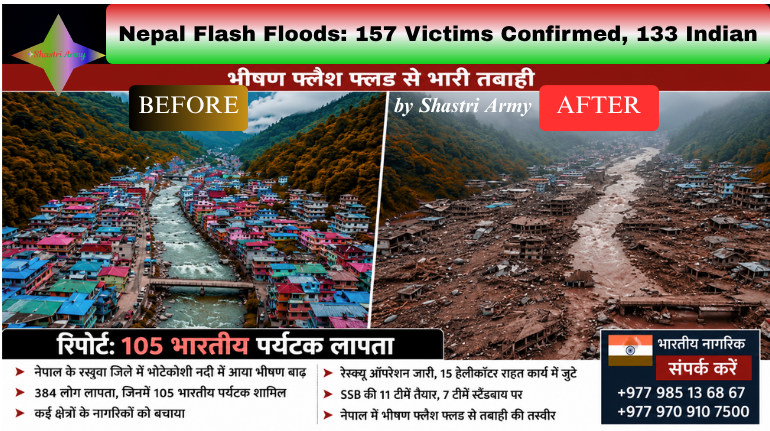
Nepal Flash Floods Cause: At least 157 people have reportedly lost their lives, while hundreds of others remain unaccounted for after devastating flash floods struck the Nepal-Tibet border region this morning. Among those missing are at least 133 Indian pilgrims travelling to Kailash Mansarovar.
According to Nepal’s tourism authorities, around 403 tourists, including 341 foreign nationals, could not be located for several hours following the disaster.
The group of missing foreign tourists included 142 Indians, along with travellers from Australia, Britain, Malaysia, the Netherlands, Portugal, South Africa, South Korea and the United States.
Nepalese rescue teams are working urgently to locate survivors and recover victims trapped beneath mud, debris and floodwater. Prime Minister Balendra Shah has directed government agencies to use all available resources for rescue, relief and recovery operations.
The floodwaters swept through the Bhote Koshi River at around 9 a.m. local time after the surge moved across from the Tibet side. The districts of Rasuwa, Dhading and Nuwakot were among the areas seriously affected by the disaster.
India quickly stepped forward with humanitarian support. The Indian Air Force sent a transport aircraft carrying around 10 tonnes of relief supplies and medical equipment to assist the emergency response.
Aid workers described the destruction as severe, saying that some entire settlements had been completely destroyed by the powerful floodwaters.
Nepal’s Prime Minister Balendra Shah promised that the government would provide its strongest possible response to the crisis.
Addressing affected communities, Shah said the suffering and loss were immense but assured people that they would not have to face the disaster alone. He emphasized that the government would use all available resources to support rescue, relief and recovery efforts.
A devastating flash flood in Nepal has left behind a heartbreaking trail of destruction, with 157 deaths reported and 133 Indian pilgrims and travellers reported missing. The disaster has created fear and uncertainty among families waiting for news of their loved ones.
The flooding has affected areas close to the Nepal–China border, where difficult Himalayan terrain, damaged roads and disrupted communication have made rescue operations extremely challenging.
For many Indian families, the situation is particularly worrying because several people were travelling through Nepal for religious journeys and tourism. Authorities are continuing search and rescue efforts while trying to confirm the identities and locations of missing people.
Nepal Flash Floods Cause Massive Destruction
Flash floods can be extremely dangerous because they develop quickly and can carry huge amounts of water, mud, rocks and debris.
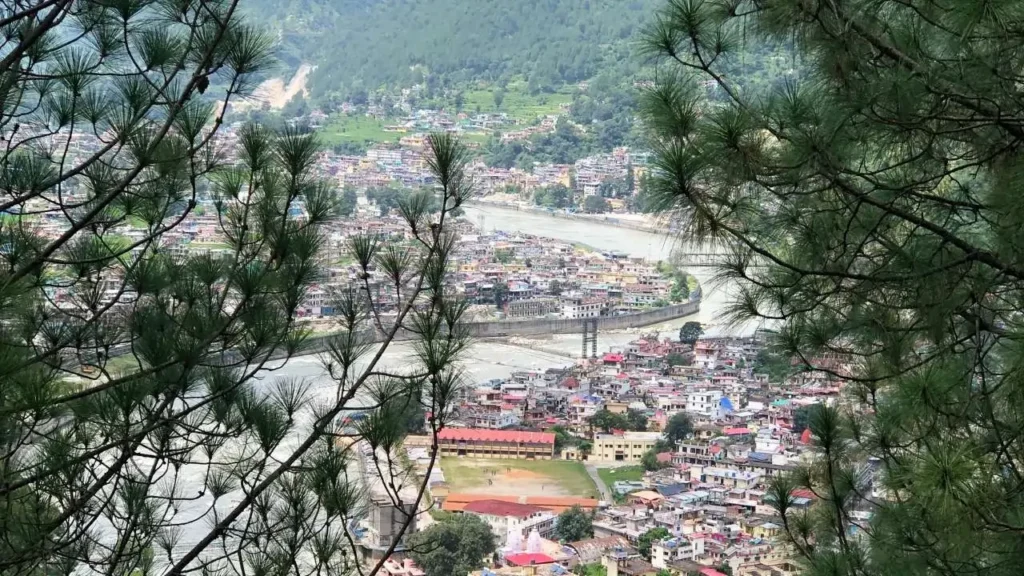
The latest disaster struck a mountainous area where narrow valleys and steep slopes can make flooding even more destructive. Water moving rapidly through these areas can damage roads, bridges, homes and other infrastructure within a very short time.
Several locations have reportedly been cut off because roads and bridges were damaged. This has created additional difficulties for emergency teams trying to reach people who may be trapped or stranded.
The situation remains challenging as rescue workers continue to assess the full extent of the destruction.
Death Toll Reaches 157
The reported death toll has reached 157, making the Nepal flash flood one of the country’s most serious recent natural disasters.
However, the number may change as rescue teams reach remote areas and authorities verify information from hospitals, affected communities and emergency teams.
During major natural disasters, initial figures often change because some locations cannot immediately be reached. People may also be listed as missing simply because communication has been lost.
Authorities are therefore working to establish accurate information while continuing rescue operations.
133 Indian Pilgrims and Travellers Missing
One of the most concerning aspects of the disaster is the number of Indian nationals who remain unaccounted for.
As many as 133 Indian pilgrims and travellers have been reported missing following the flooding.
The missing people are believed to include individuals travelling through Nepal for religious and tourism purposes. Some were reportedly on their way toward the Kailash Mansarovar pilgrimage route.
For families in India, the uncertainty has been extremely difficult. Many are waiting for authorities to confirm whether their relatives have been rescued, moved to safe locations or are still stranded in affected areas.
Kailash Mansarovar Pilgrimage Adds to Concern
The Himalayan region attracts thousands of visitors each year, including pilgrims travelling toward Kailash Mansarovar.
For many Indian devotees, the journey is an important religious experience. Nepal often serves as a major transit point for people travelling toward the Himalayan pilgrimage region.
The timing of the Nepal Flash Floods has therefore created serious concern among families whose relatives were travelling as part of pilgrimage groups.
Search teams are working to identify missing travellers and determine where groups may have been separated during the disaster.
Difficult Himalayan Terrain Complicates Rescue
Rescuing people in mountainous Nepal is never easy, and a major Nepal Flash Floods makes the task even more difficult.
Steep mountains, narrow roads and unstable slopes can prevent rescue vehicles from reaching affected locations.
In some areas, damaged bridges may force rescue teams to take longer routes. In other locations, helicopters or other aircraft may be necessary to reach stranded people.
Floodwater can also leave behind thick mud, rocks and broken trees, creating dangerous conditions for rescuers.
Emergency teams must therefore move carefully while searching for survivors.
Roads and Bridges Damaged
Infrastructure damage has become one of the biggest challenges following the floods.
Roads are essential for transporting rescue workers, food, medicine and other emergency supplies. When roads are washed away or covered by debris, reaching affected communities becomes much harder.
Bridges are equally important in mountainous regions because they connect communities separated by rivers and deep valleys.
Damage to bridges can isolate entire areas and delay emergency assistance.
The rebuilding process is likely to take considerable time in places where the terrain itself makes construction difficult.
Communication Problems Increase Fear
Communication has also become a major concern.
Floods can damage electricity supplies, mobile towers and other communication infrastructure. When this happens, people may be unable to contact their families even if they have survived the disaster.
This creates confusion around missing-person numbers.
A traveller who cannot make a phone call may be reported missing by relatives. Later, that person may be found safe at a shelter or another location.
For this reason, authorities need time to verify the status of everyone reported missing.
Families are being urged to rely on official updates rather than unverified information spreading on social media.
Rescue Teams Continue Their Search
Emergency workers are continuing search and rescue operations across affected areas.
Their main objectives are to find survivors, locate missing people, provide medical assistance and move stranded residents and travellers to safer locations.
Rescue workers are also assessing damaged buildings and roads to determine which areas remain dangerous.
The operation is expected to continue as authorities gain access to places that were initially isolated.
Every rescued person provides hope to families still waiting for information about missing relatives.
India Closely Monitoring the Situation
The disaster has also triggered concern in India because of the large number of Indian nationals reported missing.
Indian authorities are working with Nepalese officials to collect information about affected citizens.
Families searching for relatives are waiting for confirmed information about their whereabouts.
The focus is not only on locating missing people but also on helping those who have been rescued and ensuring that they can safely return home.
For families, even a small update can provide significant relief during such an uncertain period.
Why Flash Floods Are So Dangerous
Unlike normal flooding, flash floods can occur with very little warning.
Water levels can rise rapidly, especially in mountainous areas where heavy rainfall, landslides, melting snow or sudden releases of water can affect rivers and streams.
The water can move at tremendous speed and carry large rocks and other debris.
This makes Nepal Flash Floods particularly dangerous for people living or travelling near river channels.
Tourists and pilgrims who are unfamiliar with the local geography may face additional risks because they may not know where safe areas are located.
The Human Cost of the Disaster
Behind the numbers are hundreds of families dealing with unimaginable pain.
The reported deaths mean that many families have lost parents, children, relatives or friends.
For those whose loved ones remain missing, the situation is different but equally painful. They are waiting for confirmation while hoping that their relatives will be found alive.
Natural disasters often leave emotional scars long after the floodwater disappears.
Communities will have to rebuild homes, roads, businesses and livelihoods while families begin the difficult process of recovering from their losses.
Importance of Early Warning Systems
The disaster has also highlighted the importance of early warning systems in mountain regions.
A few minutes of advance warning can sometimes make the difference between life and death during a Nepal Flash Floods.
River monitoring systems, weather alerts, emergency communication networks and local warning mechanisms can help people move away from dangerous areas before flood water arrives.
Tourist and pilgrimage routes also need clear emergency procedures so visitors know what to do when a sudden disaster occurs.
Better preparation cannot prevent every natural disaster, but it can reduce the number of lives lost.
What Happens After the Rescue Operation?
Once the immediate search and rescue operation is completed, Nepal will face a major recovery challenge.
Authorities will need to repair roads and bridges, restore electricity and communication services and provide support to people who have lost homes or businesses.
Medical teams may also need to continue treating injured survivors.
For the tourism and pilgrimage sector, restoring safe travel routes will be important.
The disaster could also lead to a review of emergency planning in vulnerable Himalayan regions.
Nepal Flash Floods: A Warning for Travellers
The tragedy serves as an important reminder for anyone travelling through mountainous areas.
Before starting a journey, tourists and pilgrims should check weather conditions, travel advisories and local warnings.
Keeping family members informed about travel plans can also make it easier for authorities to locate someone during an emergency.
Travellers should avoid rivers and low-lying areas when authorities issue flood warnings and should follow instructions from local emergency officials.
Being prepared may seem unnecessary during a normal journey, but it becomes extremely important when weather conditions suddenly change.
Final Thoughts
The Nepal flash flood disaster has become a heartbreaking tragedy, with 157 deaths reported and 133 Indian pilgrims and travellers still missing in the latest figures.
Rescue teams continue to work in difficult conditions as authorities search for survivors and try to establish the whereabouts of missing people.
For families in India and Nepal, the coming hours and days will be filled with hope, anxiety and uncertainty.
The disaster has also demonstrated the tremendous risks faced by communities and travellers in the Himalayan region. Stronger early-warning systems, better emergency communication and improved infrastructure could help reduce the impact of similar disasters in the future.
For now, the priority remains clear: save lives, find the missing, help survivors and support families affected by this devastating flood.
Frequently Asked Questions
1. How many people have died in the Nepal flash floods?
The latest reported figure puts the death toll at 157, although disaster figures can change as rescue teams reach more affected areas.
2. How many Indian pilgrims are missing?
133 Indian pilgrims and travellers have been reported missing in connection with the disaster.
3. Where did the Nepal flash floods occur?
The disaster affected areas in the mountainous region of Nepal near the Nepal-China border, where difficult terrain has complicated rescue operations.
4. Why are rescue operations difficult?
Damaged roads, destroyed bridges, unstable slopes, debris and poor communication have made it difficult for rescue teams to reach some locations.
5. Were Indian pilgrims travelling through the affected area?
Yes. Indian pilgrims and tourists were travelling through Nepal, including people associated with journeys toward the Kailash Mansarovar region.
6. Can the death toll increase?
Yes. The situation remains developing, and the number of deaths or missing people may change as authorities continue search operations and verify information.
7. Why are some people listed as missing?
Some people may have lost contact with their families because of damaged communication networks. Others may be stranded in areas that rescue teams have not yet reached.
8. What is the main priority for rescue teams?
The immediate priorities are finding survivors, locating missing people, providing medical assistance and moving stranded people to safe areas.
9. What should travellers do during a flash flood warning?
Travellers should move to higher and safer ground, stay away from rivers and low-lying areas, follow local emergency instructions and avoid attempting to cross flooded roads or bridges.
10. What can be learned from the Nepal flood disaster?
The disaster highlights the importance of early-warning systems, reliable communication, emergency planning and safer infrastructure, particularly in vulnerable mountain regions.